Stay or go
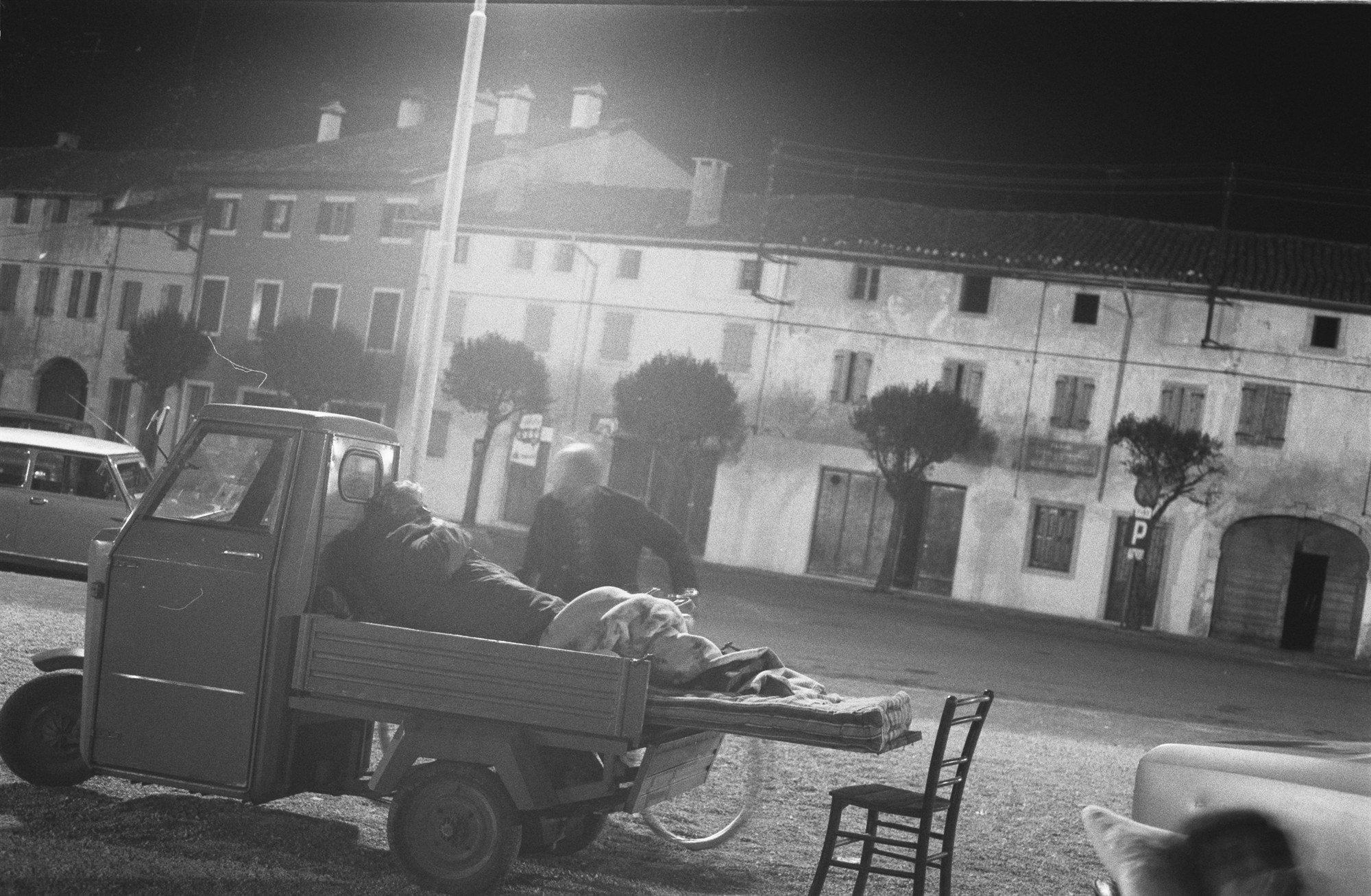
Orio del Mistro, Archivio CRAF
Sfollati in piazza Italia a Maniago, 1976
For those whose homes had been damaged by the earthquake of May 1976, the
hope of returning home quickly faded. The goal of transitioning “from tents to
houses” soon proved to be unachievable. As the months passed, resistance to the
“barracks”, which the earthquake victims saw as a reminder of a situation they
had already experienced elsewhere in Italy, weakened. Meanwhile, anger grew
among those in the tents who feared having to spend the winter in those
conditions.
The homeless were organised into committees, one for each tent camp.
Supported by the Friulian Church, they publicly denounced their situation,
including during the visit to Friuli by the President of the Italian Council of
Ministers, Giulio Andreotti (here's an exclusive interview). Shortly afterwards, the strong tremors in
mid-September dispelled any remaining illusions, making it clear that
reconstruction would be a lengthy process and that preparations for the
approaching winter had to be made. Recalled to Friuli, the Special Commissioner,
Giuseppe Zamberletti, was given free rein to organise the evacuation of
thousands of people and the installation of prefabricated units, which he
undertook to complete by March 1977.
With the help of the army, the transfer of more than 32,000 people was
organised to the Friulian Adriatic coast, nearby Venetian seaside resorts and
the Carnic mountains within a few weeks. Families were accommodated in private
homes, while elderly people who were unable to care for themselves were housed
in hotels. An extraordinary network of assistance was mobilised. In the tourist
locations, communities organised themselves to coordinate services, assist the
most vulnerable and those who had lost family members, and maintain a sense of
community. Priests and young people were at the heart of this extraordinary
sense of community.
Within six months, Zamberletti had launched and completed the construction
of the prefabricated villages. On March 31 1977, the hotels in tourist
locations were vacated, and the homeless population returned to their towns,
where they were provided with temporary housing until reconstruction was
completed. This would be a lengthy process requiring the efforts of everyone
involved.